
The Quietest Person in the Meeting Is Usually Running the Company
By Omar Dakhane
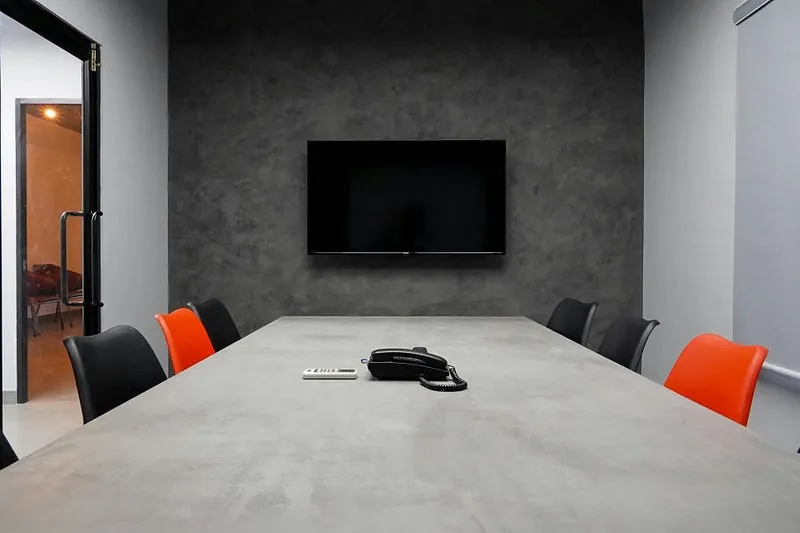
I learned this from a man named Abu Khaled, in a glass-walled conference room in Riyadh many years ago.
There were eleven people in that meeting. Ten of them talked. One of them, Abu Khaled, did not say a single word for the first forty minutes. He was the most senior person in the room. He was also the only one whose name was on the building.
For forty minutes I watched executives compete to sound smart. They interrupted each other. They drew on the whiteboard. They made jokes that landed and jokes that did not. They flexed acronyms. They referenced people from previous meetings I had not been in. It was a very expensive jazz performance.
At minute forty-one, Abu Khaled put down his pen, looked at the slide on the screen, and asked one question. Eight words. I cannot quote the exact words, but the structure was something like:
“If this works, what stops everyone else from doing it next quarter?”
The room went silent for what I am going to call a full eleven seconds. The kind of silence where everybody is suddenly aware of the air conditioning. And in that silence, the entire meeting collapsed and reassembled itself around that one question. The deck got rewritten. The strategy got reframed. Two of the loudest people in the room quietly walked their previous statements back.
I have spent the last nine years trying to figure out what Abu Khaled did in that meeting. I think I have it. I want to share it, because I think the quiet operator is the most underrated leader in modern business, and almost everyone in their thirties is being trained to be the opposite.
The talkers are auditioning. The quiet ones are working.
Here is something I have noticed across twenty years of meetings in five countries.
In any room, you can roughly split the people into two categories. The first category is auditioning. They are talking to be seen. To prove they belong. To get on the radar of the most senior person. To make sure their boss knows they were “active.” Their currency is airtime. Every minute they are not talking, in their internal scoreboard, is a minute lost.
The second category is working. They are listening for the actual question being asked. They are noticing who is contradicting themselves. They are tracking what is not being said. They are running their own private model of the business in their head and updating it in real time based on what comes out of people’s mouths. They speak when speaking will change the outcome. Otherwise they listen.
The audition group thinks the second group is shy. Or political. Or, the worst version of this, “not strategic.” Anyone who has actually run a business for more than a few years knows the second group is who you call at 11 p.m. when something is on fire. Because they have been quietly watching the wiring for months while everyone else was busy being charismatic.
I am not saying you should never speak in meetings. I am saying the meeting itself is not the work. The meeting is a moment in which the work briefly becomes visible. If you mistake the moment for the work, you spend a career performing instead of building.
What the quiet operator is actually doing
This is the part nobody teaches at business school, because business school grades you on participation.
When a senior operator goes quiet in a room, it is almost never because they have nothing to say. It is because they are doing one of three specific things, and once you can see the three, you start to recognize the move.
They are letting the room reveal itself. People who talk a lot in meetings tell on themselves within ten minutes. You learn who actually understands the numbers and who is parroting somebody else’s deck. You learn who is here to win the meeting and who is here to win the year. You learn whose body language tightens when a particular topic comes up. None of this information is available to the person who is busy waiting for their turn to speak.
They are letting bad ideas die naturally. Here is a thing I had to learn the hard way. When somebody in a meeting proposes something that is going to fail, you do not need to kill it. The room will kill it for you, if you give the room time. Junior operators rush to dismantle bad ideas because they think it shows insight. Senior operators know that watching a bad idea fail in front of its author is much, much more productive than killing it on their behalf. The author learns. You stay clean. The next meeting goes better.
They are saving their one bullet. Every meeting has roughly one moment where the right sentence, said by the right person, changes the outcome. If you have used your credibility on five mediocre comments by minute thirty, you do not have it left at minute forty-one. The quiet operator is not saving energy. They are saving authority. Authority is finite per meeting, and most people spend it like it is monopoly money.
The myth of “executive presence”
Somewhere in the last fifteen years, the corporate world decided that “executive presence” meant talking confidently. Filling the room. Anchoring the conversation. Being the voice the camera cuts to.
I think this is wrong, and I think it is making a generation of operators worse at their jobs.
The actual executive presence I have seen, from the people who run real businesses with real revenue and real teams, is closer to the opposite. They listen with a kind of disciplined attention that makes the person speaking feel both flattered and slightly nervous. They ask short questions. They almost never explain themselves. They do not need to. The room reorganizes around their silence.
I once worked with a chairman who would say maybe forty words in a ninety-minute meeting. Those forty words decided the agenda for the next quarter every single time. I do not think anybody on his team would have called him quiet. They would have called him precise. There is a difference.
If you want to develop that kind of presence, do not practice talking. Practice not talking when you have something to say. That is the actual exercise. It is much harder than it sounds. The first few times you do it, your jaw will hurt.
What I tell the people I mentor
Most of the people I have mentored in their twenties and early thirties come to me with the same problem, even when they think they are coming to me with different problems.
They feel invisible at work. They are doing good work. They are not getting the recognition. They are watching less talented colleagues get promoted because those colleagues “show up” more in meetings. They want to know how to talk more. How to be more “visible.” How to “have a stronger voice.”
I almost never give them the answer they came for.
What I tell them, instead, is this. For the next three months, in every meeting you are not formally chairing, set yourself a budget of three sentences. Three. Total. For the whole meeting. You can spend them however you want. You can spend them all in the first ten minutes if you panic. You can save them for the end. You can not spend them at all on a given day.
But you cannot exceed three.
What happens, almost without exception, is that within six weeks the quality of those three sentences becomes so high that the dynamic of every meeting starts to change around them. People wait for the person to speak. The chair starts looking at them when a hard question comes up. Their boss starts pulling them into smaller, harder rooms.
This is not a hack. This is just what happens when you stop spending your sentences on noise and start spending them on signal.
The scarier truth underneath
I want to end with the part of this I am still uncomfortable about, because I do not want to write a piece that makes silence sound like a clean strategy.
The reason most people overspeak in meetings is not ego. It is fear. Specifically, the fear that if they stop being visibly active, somebody will quietly conclude they are not contributing, and they will be on the next round of layoffs, and their kids will not get to keep going to the school they go to. That fear is real. It is not stupid. In a lot of organizations, it is correct.
So when I tell you to be quieter in meetings, I am not telling you to be passive. I am telling you to redirect the energy you currently spend on performing into actually understanding the business well enough that, when you do speak, the room cannot afford to ignore you.
That is a much harder bargain. It will take a year, maybe two, before it pays. During that time, the loud people will get promoted ahead of you. You will have to sit with that. It is genuinely uncomfortable.
But on the other side of that discomfort is a version of your career where you are no longer auditioning. Where you walk into rooms and the rooms reorganize. Where forty minutes pass and ten people talk and you put down your pen, ask one eight-word question, and watch the strategy of an entire company quietly bend around it.
Abu Khaled did not become Abu Khaled in a day. He just stopped trying to win meetings. And then, one quiet decade at a time, he started winning the company instead.
That trade is available to almost anyone reading this.
Almost nobody takes it.